Table of contents
Solo travel is having a moment, and not just on social media, where “me trips” are now a marketing category of their own, but also in the numbers, with tour operators and airlines reporting sustained demand for one-person bookings since the pandemic reset travel habits. Yet on the road, many travellers discover a paradox : the more independent the itinerary, the more valuable a few well-chosen group moments become, for safety, for access, and for the kind of stories that can’t be scripted in a notes app.
They turn cities into conversations
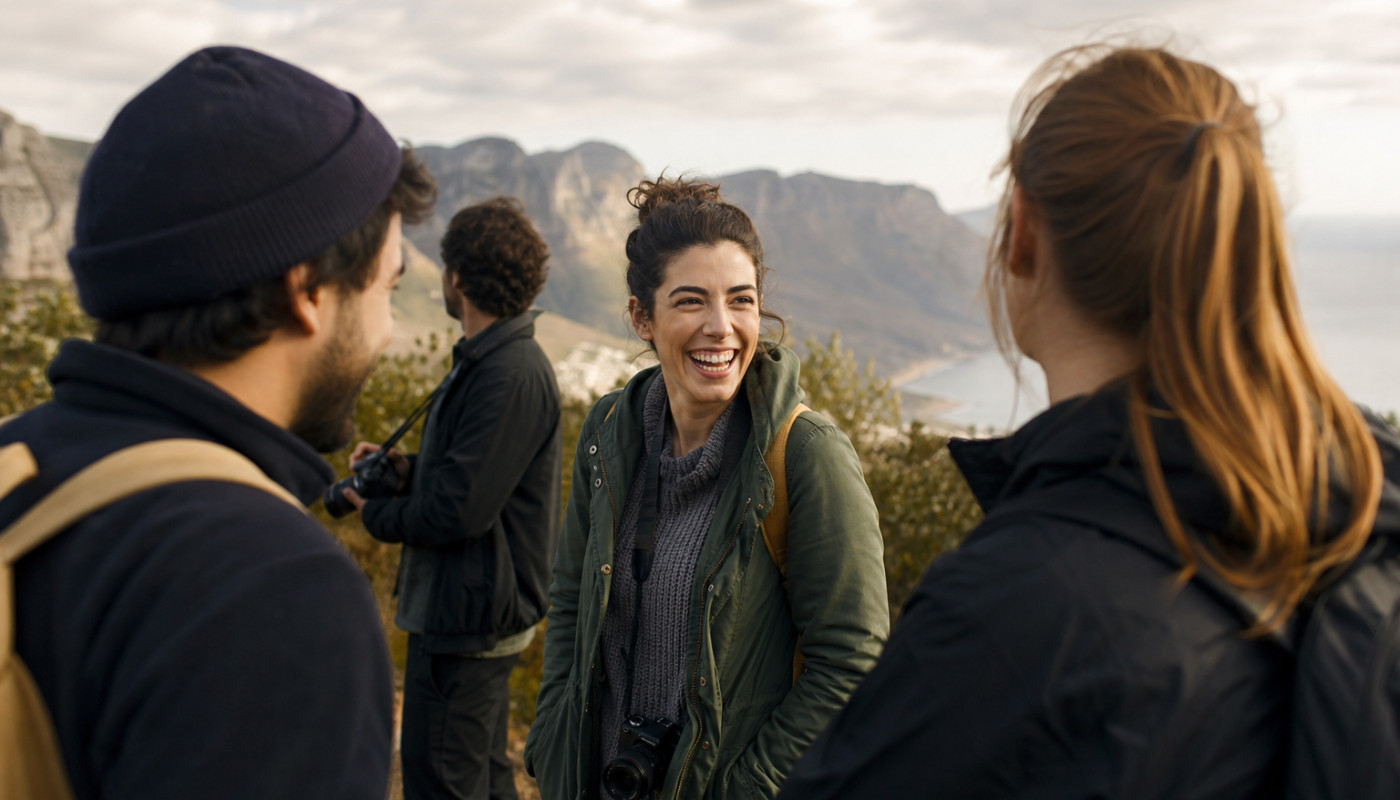
Can a place feel different in one hour? It often does, the moment a solo traveller joins a small group and the city stops being a backdrop and starts answering back. The most immediate change is social : instead of scanning maps and signs in silence, you start listening, asking, comparing, and laughing at the tiny misunderstandings that would otherwise stay private. In practice, group activities create “low-stakes intimacy”, because you share an experience without having to build a full travel partnership, and that frees many solo travellers from the pressure of either being completely alone or suddenly attached to a new acquaintance for days.
This is not just anecdotal. Tourism researchers have long described travel as a social practice, and studies on group tours repeatedly highlight higher perceived satisfaction when visitors feel “hosted” rather than merely “served”, particularly in unfamiliar environments. A key mechanism is narrative : guides, instructors, and even other participants provide context that changes what you notice. A solo traveller might photograph a skyline; a group, prompted by a local explanation, might debate why the skyline exists, who moved where, and what was lost or gained. The difference is subtle, but it shapes memory, and it is why so many independent travellers schedule at least one guided walk, food crawl, or workshop early in a trip, because it accelerates orientation and gives the rest of the days a clearer texture.
There is also a practical upside that rarely gets framed as such : group activities reduce decision fatigue. Solo travel is romantic until it becomes an endless series of micro-choices, where to eat, how to get there, what to skip, and the cognitive load can be real. A two- or three-hour group experience hands you a structured slice of the day, and the mind relaxes, which paradoxically makes the solo time afterward feel more expansive. You return to wandering with better energy, and with a shortlist of tips that are more trustworthy than generic reviews, because they come from people who just stood where you are standing.
Safety becomes less of a calculation
Freedom is thrilling, but it comes with arithmetic. When you travel alone, every late-night return, every unfamiliar neighbourhood, every “should I?” moment is a risk assessment performed in real time, and even in very safe destinations, that constant evaluation can quietly shape behaviour. Group activities change the equation not by eliminating risk, but by redistributing it : you move with others, you learn safe routes, you understand local norms faster, and you gain confidence that is based on concrete information rather than instinct alone.
Data helps explain why this matters. In surveys across major travel markets, safety consistently ranks among the top considerations for travellers, and solo travellers tend to report higher concern levels than those travelling with companions, especially regarding evening transport and scams. The group format addresses both. First, it creates predictable logistics : meeting points, known end times, and a clear plan for getting back. Second, it increases situational awareness, because guides and locals will often name common pitfalls outright, from the classic over-friendly “helper” to the too-good-to-be-true ticket offer. Hearing these warnings in context, while watching how locals navigate the same streets, is more persuasive than reading a list online.
There is also a safety benefit that is not about danger at all : health and wellbeing. Solo travellers are more likely to push through fatigue, skip meals, or keep walking simply because stopping feels awkward when you are alone. In a group setting, breaks are built in, hydration is mentioned, and someone will inevitably say what you might not admit, that they are tired and need a sit-down. The normalisation of basic care improves the rest of the itinerary, and it is one reason active group experiences, from hikes to cycling tours, can be a surprisingly smart choice even for independent travellers who normally avoid “tours”.
Finally, group activities can function as an informal check-in system. If you join a recurring class, a multi-day excursion, or even two tours with the same operator, you become recognisable, and that visibility is useful. Staff notice when someone does not show up, other participants ask where you are staying, and you end up with a small, temporary network, which is exactly what solo travel often lacks. It is not about fear-mongering; it is about reducing the number of moments in which you are the only person responsible for every outcome.
You get access money can’t buy
Here is the uncomfortable truth : some doors do not open to a person alone, at least not easily. It is not always a matter of price, and more often a matter of relationships, timing, and trust. Group activities, especially those run by locals with deep connections, can deliver access that is almost impossible to replicate as a solo wanderer, whether that means a kitchen that normally serves only regulars, a workshop that does not advertise widely, or a viewpoint that requires knowing when and how to go.
On a practical level, groups make certain experiences viable. Think of boat trips, rural day tours, or specialised tastings, where minimum numbers are needed to operate. A solo traveller can struggle with availability, or pay a premium for a private option. In a group, costs are shared, and the experience becomes more frequent and more dependable, which matters in peak seasons when inventory sells out. This is why a solo traveller planning a short stay often benefits from locking in one or two structured activities in advance, then building the rest of the itinerary around them. It is a way to protect the trip against the most common frustration of independent travel : arriving eager, then discovering that the thing you wanted is not running today.
Access also means access to understanding. A museum label can tell you what an object is, but it rarely tells you how people feel about it now. A neighbourhood can be “historic” in a guidebook and still be contested terrain in real life. Group activities that include local voices add that layer, and they do so with nuance, because you can ask follow-up questions. The best guides do not deliver a monologue; they moderate a conversation, and solo travellers often find that they ask bolder questions in a group than they would alone, because the social setting makes curiosity feel normal.
For travellers heading to places with dense layers of culture, language, and logistics, this can be transformative. In Macau, for example, the mix of Chinese and Portuguese heritage, the fast-moving hospitality scene, and the compact geography make it easy to see a lot quickly, but harder to understand what connects the dots without help. Browsing options and availability ahead of time, including via https://www.macau-trip.com, can be a pragmatic way to identify experiences that match your interests, while still leaving space for solo wandering, because the real win is not filling every hour, it is choosing the one or two activities that unlock the rest of the trip.
Solo time feels richer afterward
The fear many independent travellers have is simple : join a group, lose the solo magic. Yet the opposite often happens, and the reason is psychological as much as practical. Group activities create contrast, and contrast sharpens perception. After a morning of shared discovery, the afternoon alone does not feel like emptiness, it feels like space, and the mind uses that space to process what it has learned, what it has tasted, and what it wants to chase next. The solo part becomes more intentional, because you are no longer wandering to fill time, you are exploring to follow a thread.
There is a social effect too. Group moments provide “social nutrition”, enough connection to satisfy the need for human contact, without requiring constant togetherness. For many solo travellers, especially on longer trips, loneliness is not a constant ache but a wave that arrives unexpectedly, often at meals or in the evening. A group class, tour, or shared activity can smooth those waves, because it gives you a few names, a few jokes, and sometimes an invitation, even if you decline it. You feel part of the place, rather than a spectator moving through it.
Interestingly, group activities can also make you braver when you are alone. After watching how others order food, negotiate a market price, or approach a cultural space respectfully, you copy the behaviour with more confidence. In that sense, groups function as a rehearsal. The next time you enter a busy restaurant solo, you do not hesitate at the door; you have seen how it works. The next time you take public transport, you recognise the rhythm. This is one of the least celebrated benefits of group travel moments : they teach you the local “operating system”, and that knowledge upgrades every independent decision afterward.
And then there are the stories. The most memorable solo travel anecdotes often involve other people, the stranger who translated a menu, the retired couple who suggested a detour, the fellow traveller who became a one-day friend. Group activities increase the probability of those encounters without forcing them. You can leave right after, or stay for a drink, and the choice remains yours, which is exactly the point : solo travel stays solo, but it becomes less solitary.
How to plan without overbooking
Keep it simple, and protect your flexibility : book one anchor activity for early in the trip, then add another only if the first genuinely improves your days. Set a clear budget, because tours, tastings, and day trips add up fast, and check cancellation terms before you pay. If you are eligible for student, senior, or resident discounts, ask; many operators apply them quietly when prompted.
Similar articles

